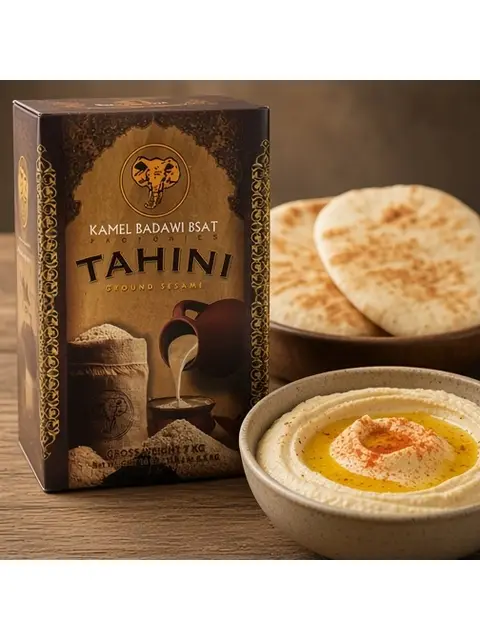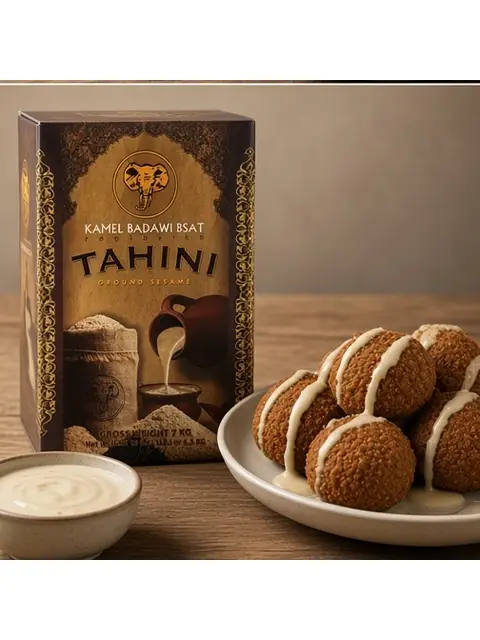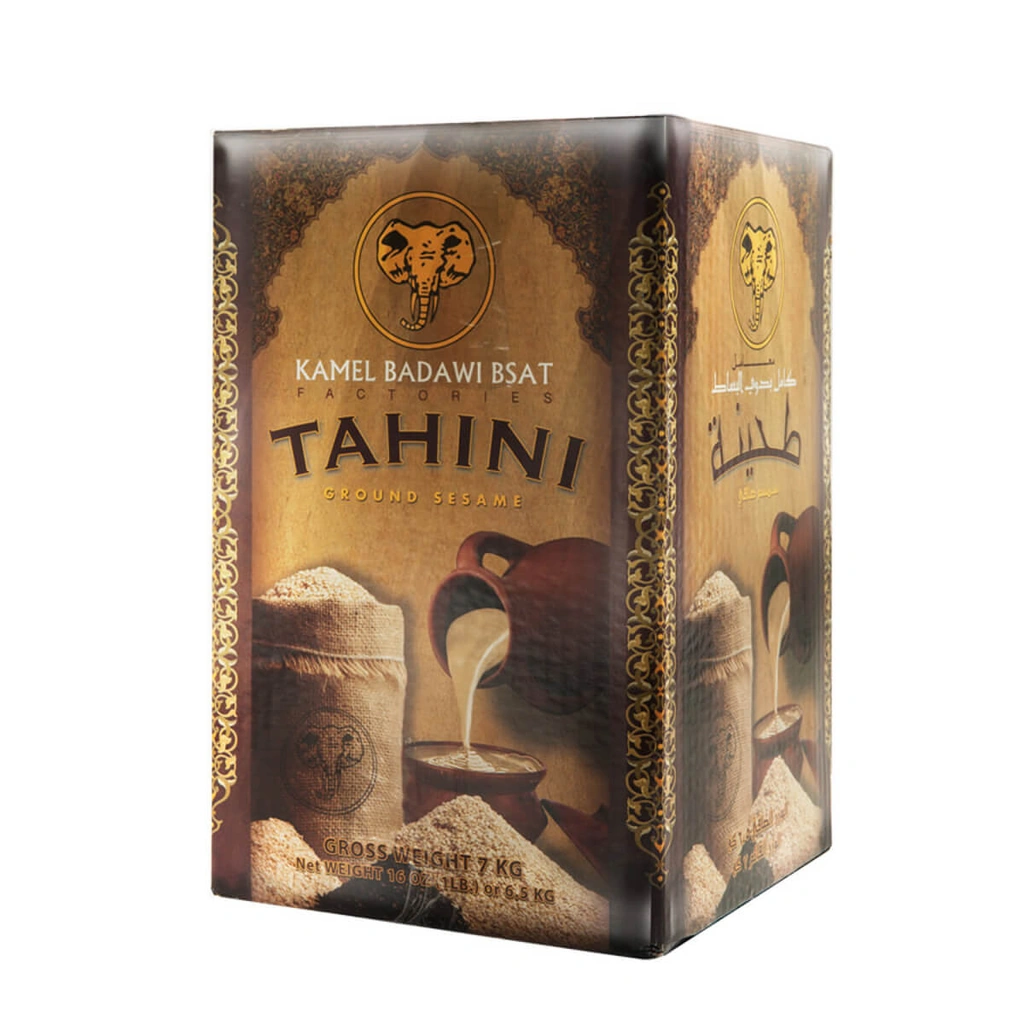
Kamel Badawi Bsat Tahini, ground sesame in a large decorated tin, for hummus kitchens, moutabal, tarator sauce, dressings and baking.
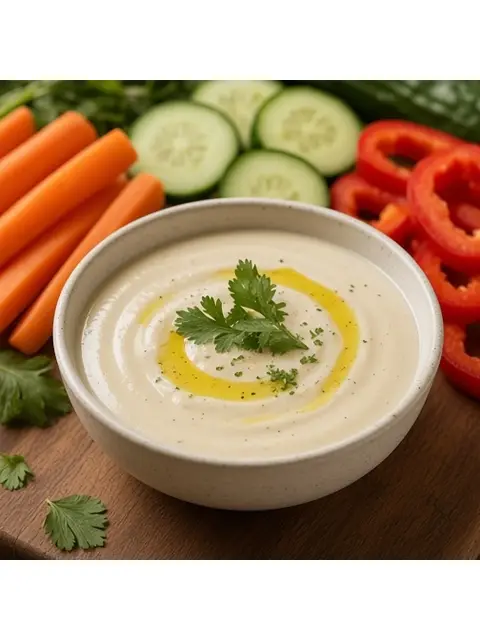
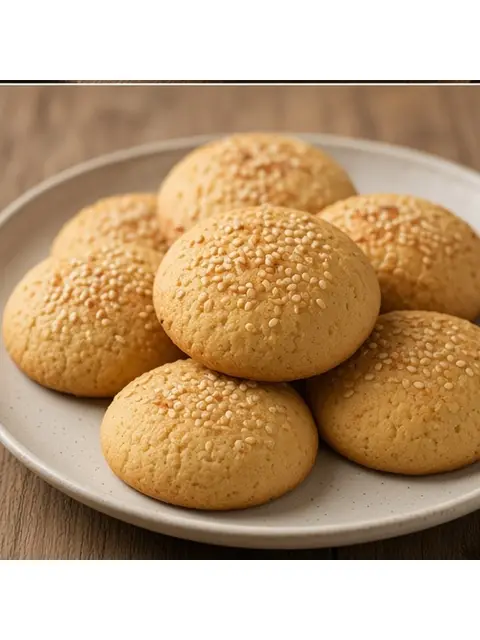
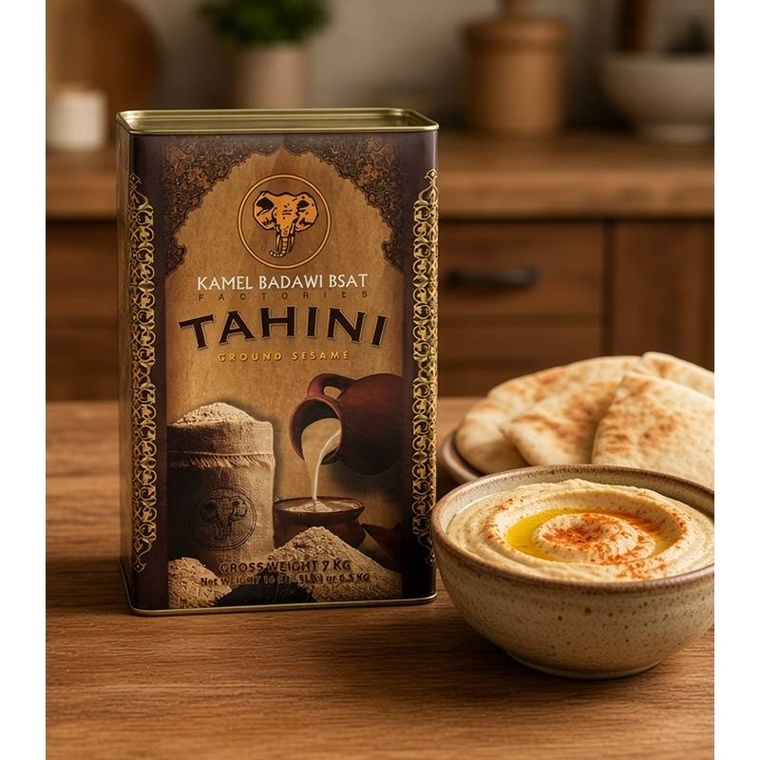
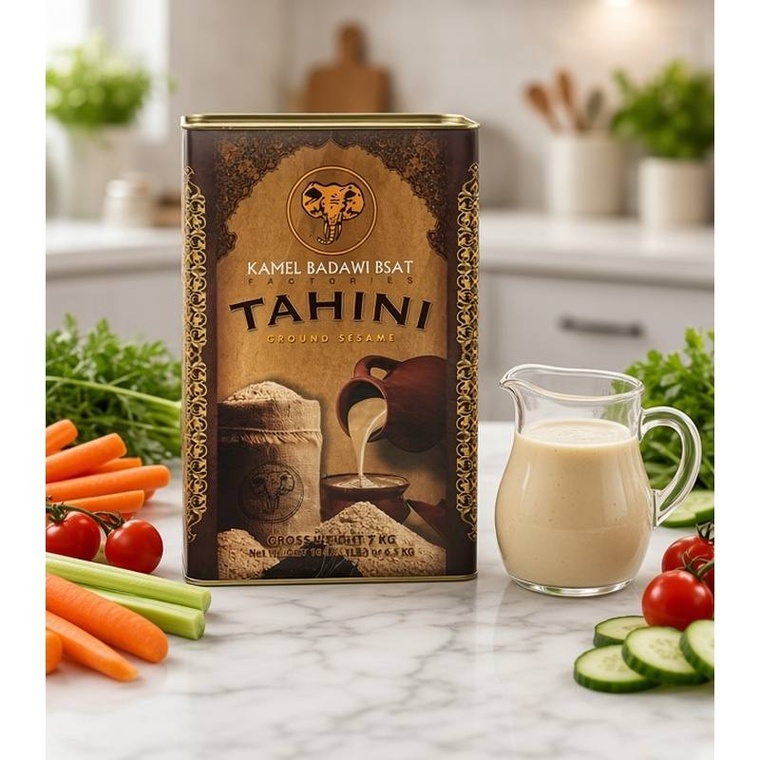
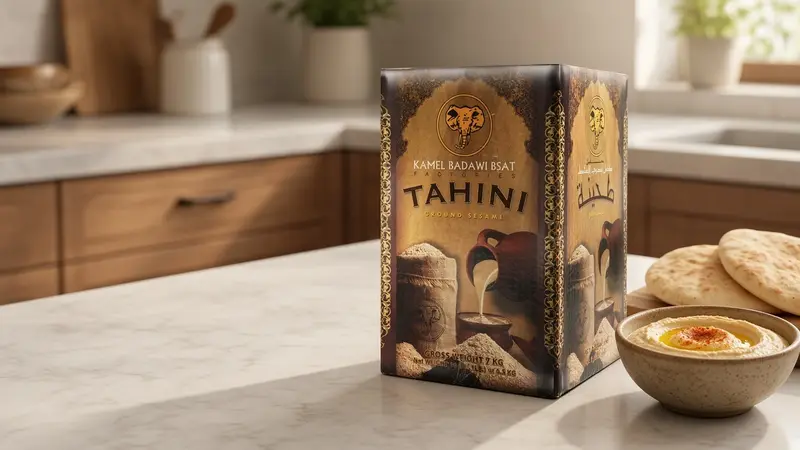
The Kamel Badawi Bsat tin looks like an old storeroom label: dark brown and gold, with ornate borders, a round emblem at the top, and TAHINI in large capitals over the words ground sesame. Below, the artwork shows a hessian sack of seed and an earthenware jug pouring a stream of tahini into a bowl, and the side of the tin repeats the name in Arabic. The gallery pairs it with a bowl of hummus finished with paprika and olive oil, warm flatbread, and a glass jug of creamy tahini sauce beside carrot sticks, cucumber and cherry tomatoes. As general background, tahini is used across the Middle East and Eastern Mediterranean, the South Caucasus, the Balkans and South Asia, and East Asian sesame paste can differ only slightly. A tin this large typically suits a restaurant or caterer that makes hummus daily. Commonly, kitchens stir the tin thoroughly first, then whisk the paste with lemon, garlic and iced water into a pourable sauce for crudites, falafel and grilled fish. It also enriches moutabal, halawa and tahini cookies. A single tin typically lasts a busy hummus kitchen through many services. Keep the lid pressed down between uses.