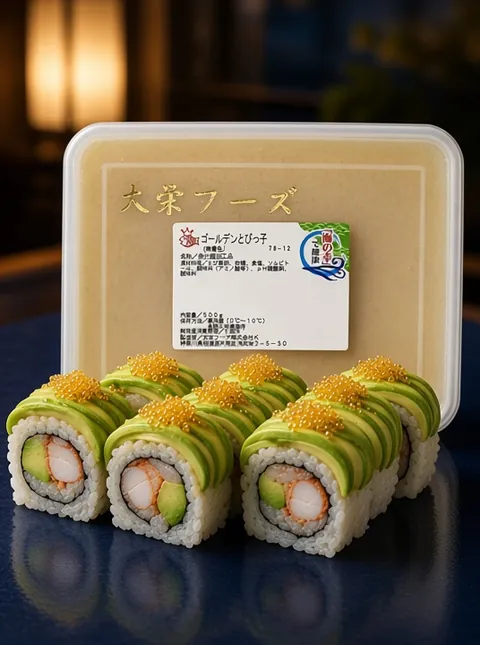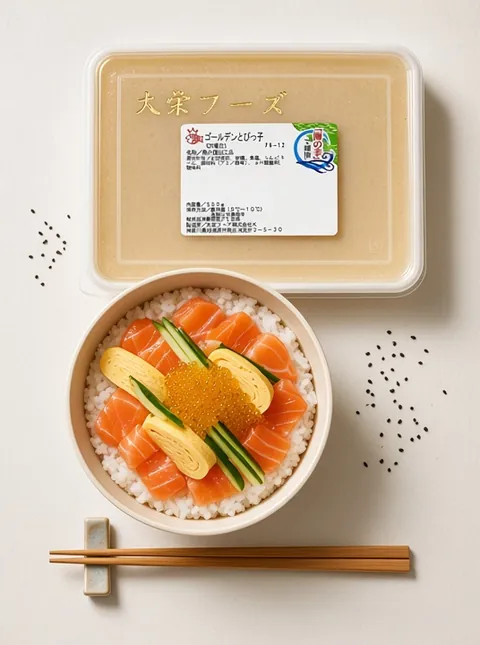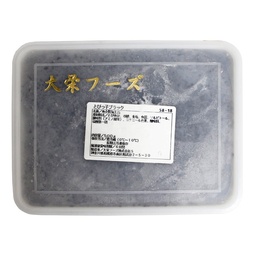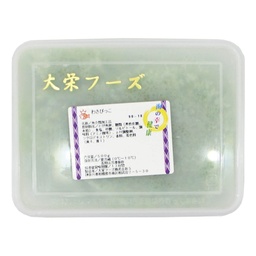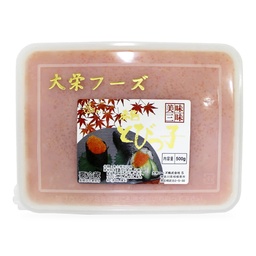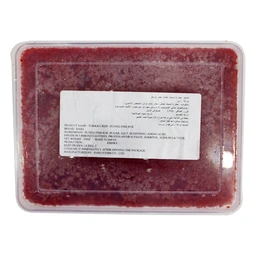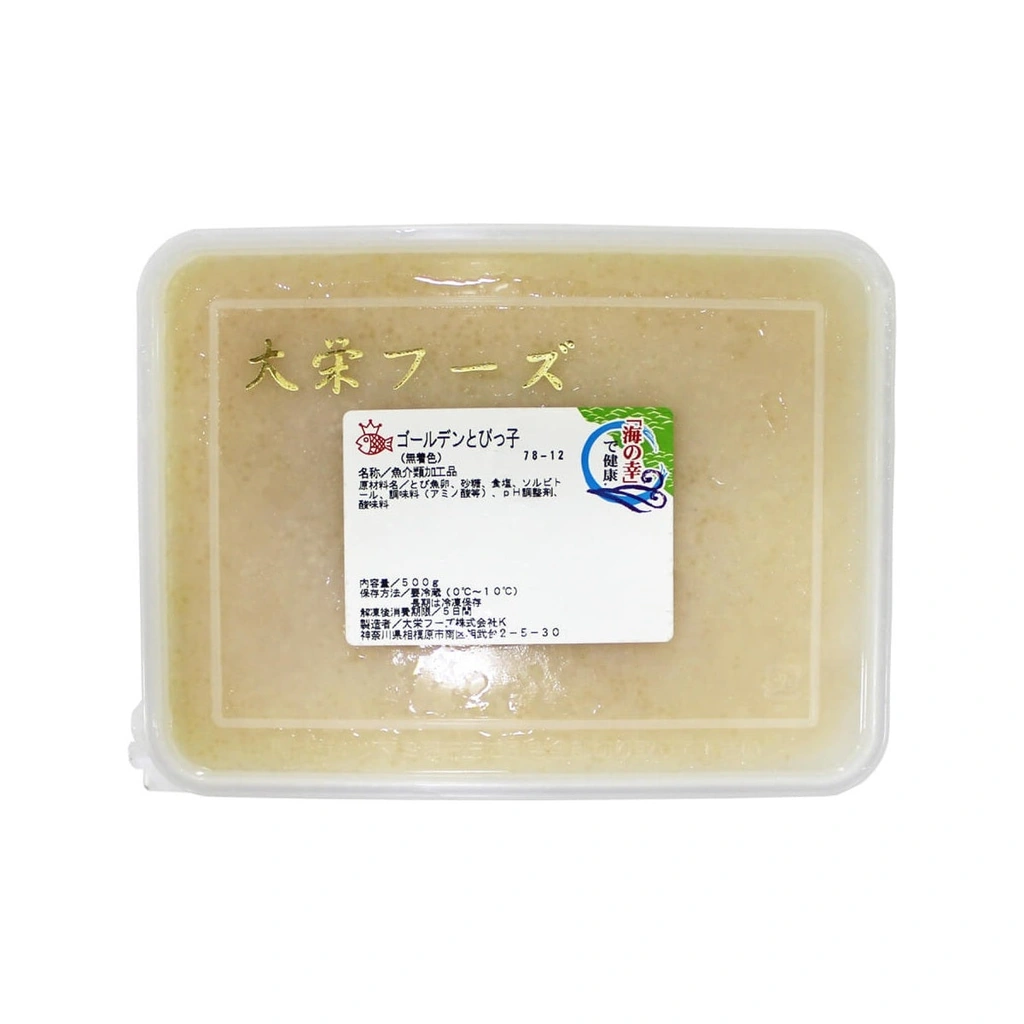
Daiei ゴールデンとびっ子, golden flying fish roe labelled uncoloured, in a 500 g tray for sushi counters, poke bowls and seafood garnishes.
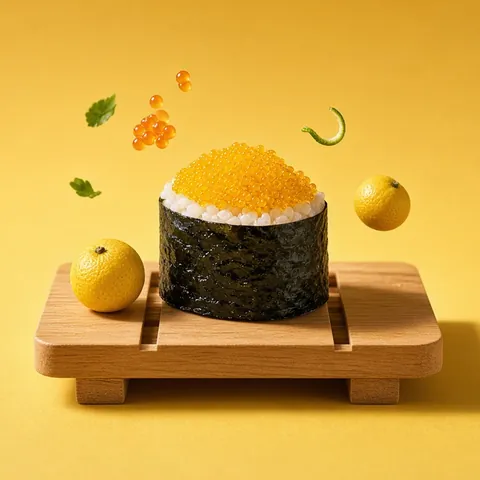
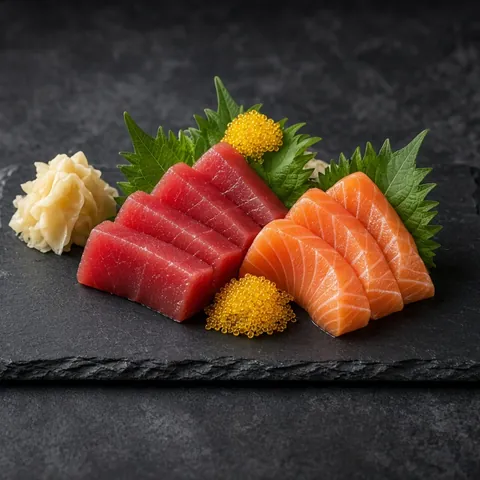
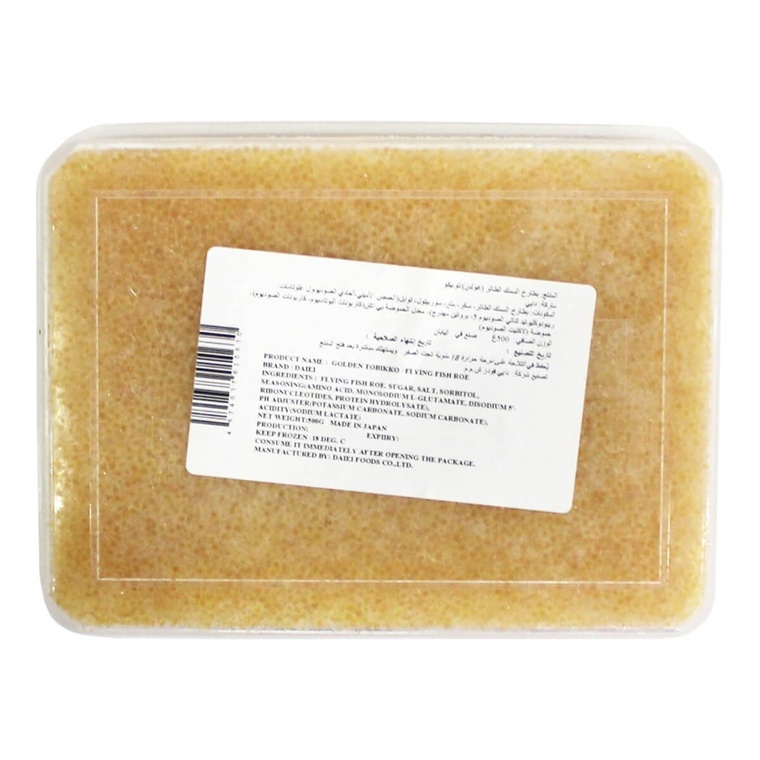
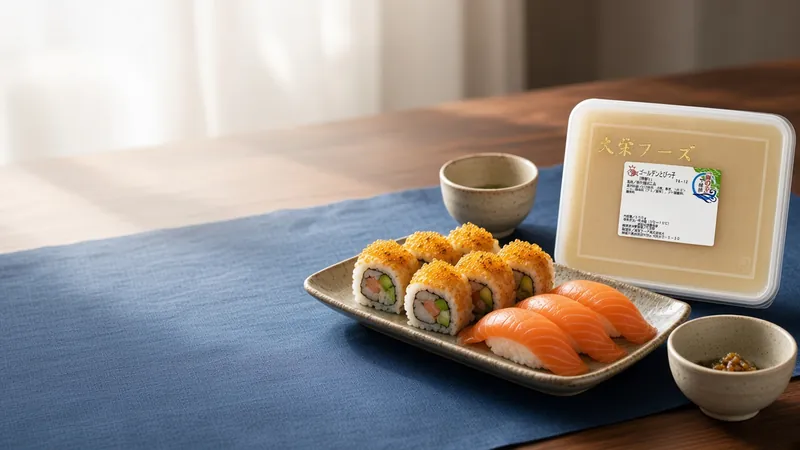
Most tobiko on a sushi counter is dyed bright orange, so the first thing to notice about this tray is its colour: a pale, honeyed gold. The Japanese label names it ゴールデンとびっ子, golden tobiko, and adds 無着色 in brackets, meaning no added colour. Gold lettering on the lid reads 大栄フーズ, Daiei Foods, and a blue seal, 海の幸で健康, translates roughly as health from the bounty of the sea. The storage line says keep refrigerated at 0–10°C, frozen for longer periods, and eat within five days of thawing; the English sticker gives keep frozen at -18°C and asks for the contents to be used straight after opening. It lists 500 g, made in Japan, with Daiei Foods of Sagamihara, Kanagawa, as the maker. As general background, tobiko eggs are usually 0.5 to 0.8 mm, larger than masago but smaller than ikura. The gold shade earns its place where colour contrast matters: as general practice, chefs spoon it onto gunkan maki, roll the outside of uramaki in it, top hand rolls and chirashi, and fold it through crab or salmon salad. It also lifts poke bowls, devilled eggs and chilled pasta with a crunchy pop.