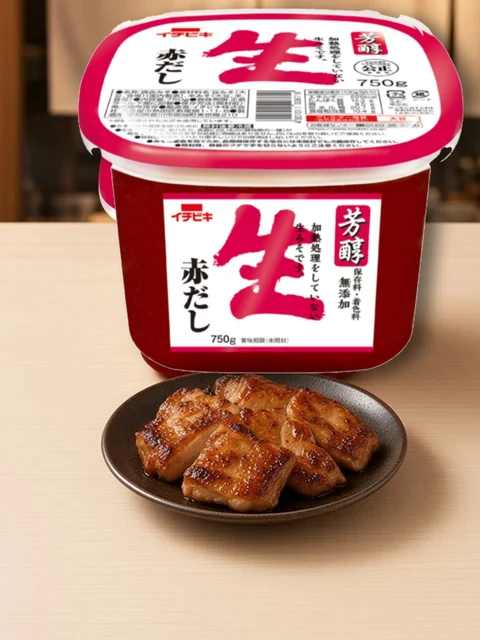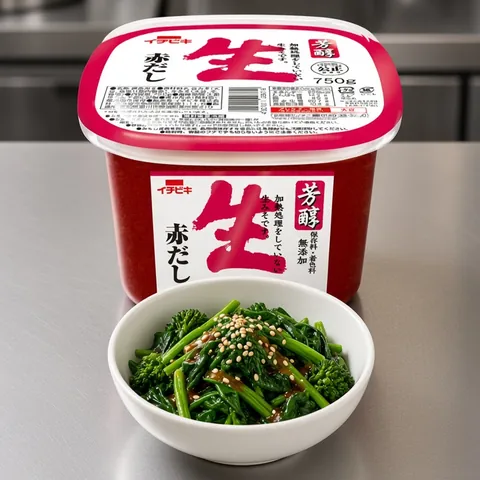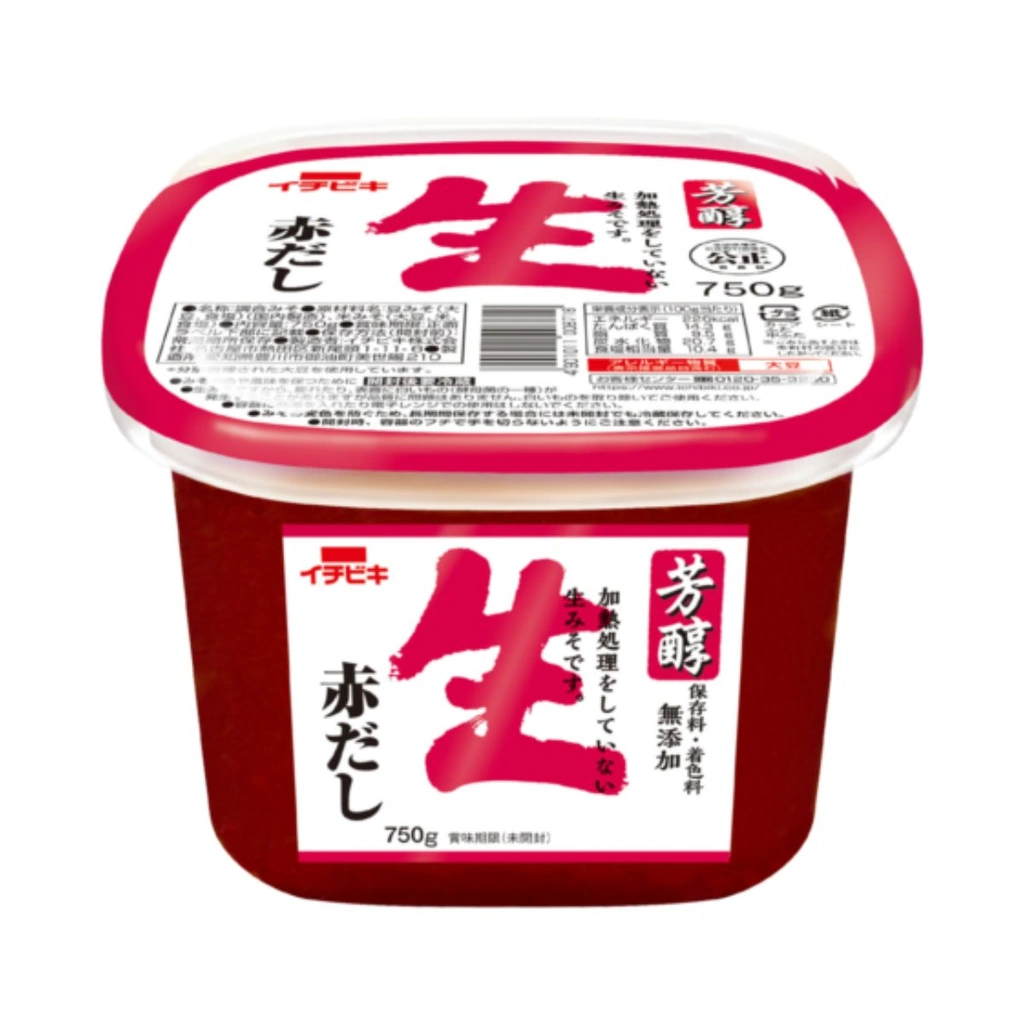

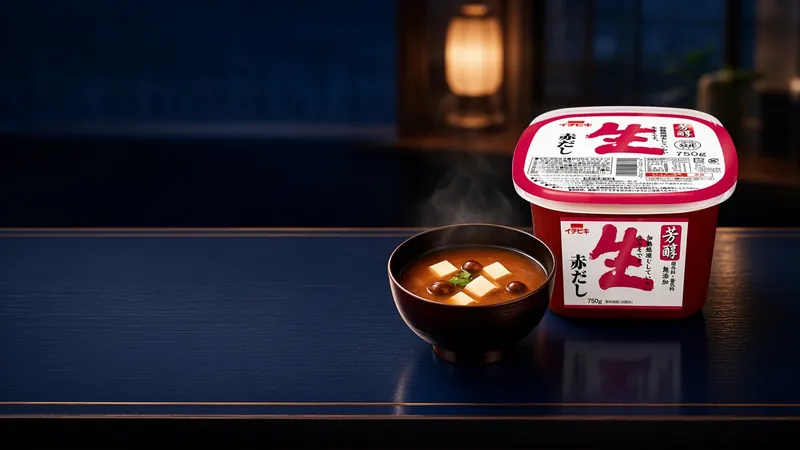
Ichibiki houjun nama akadashi, an unheated red miso in a 750 g tub, labelled free of preservatives and colourings, for akadashi soup and rich simmered dishes.
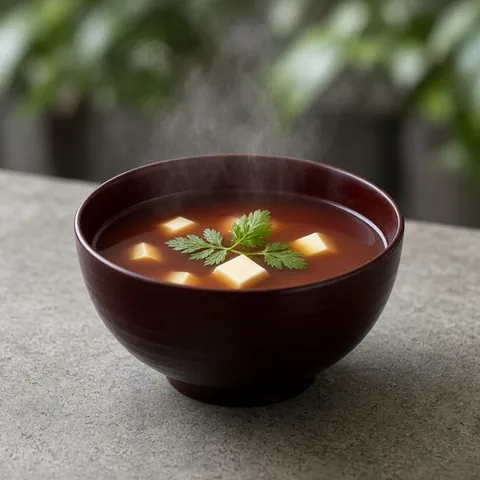
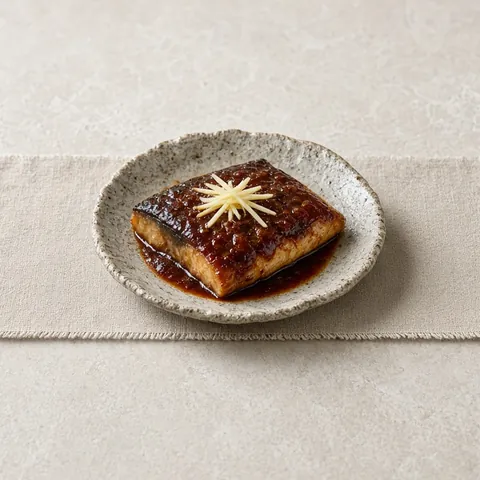
A huge brush-stroke 生, raw, dominates both the lid and the side of this red-and-white tub, flanked by 芳醇, rich and mellow, and 赤だし, akadashi. The small vertical line beside it states 加熱処理をしていない生みそです: this is a raw miso that has not been heat-treated. A boxed note adds 保存料・着色料無添加, no preservatives or colourings, the Ichibiki name appears in red katakana on both faces, and the weight is printed as 750 g; a red banner on the lid reads 開封後要冷蔵, refrigerate after opening. As general background, miso is commonly described as a traditional Japanese seasoning used for sauces and spreads, for pickling, and mixed with dashi soup stock as miso soup, with varieties described as salty, sweet, earthy, fruity or savoury. Akadashi is the dark, deeply savoury style typically associated with the Nagoya region, and its classic use is a red miso soup with tofu, nameko mushrooms or clams. Commonly, cooks dissolve it into hot dashi just off the boil, because boiling dulls the aroma of raw miso. It also anchors miso-nikomi udon, glazes aubergine for dengaku, and seasons braised beef or mackerel. Its intensity means kitchens typically use slightly less than they would of a white miso.